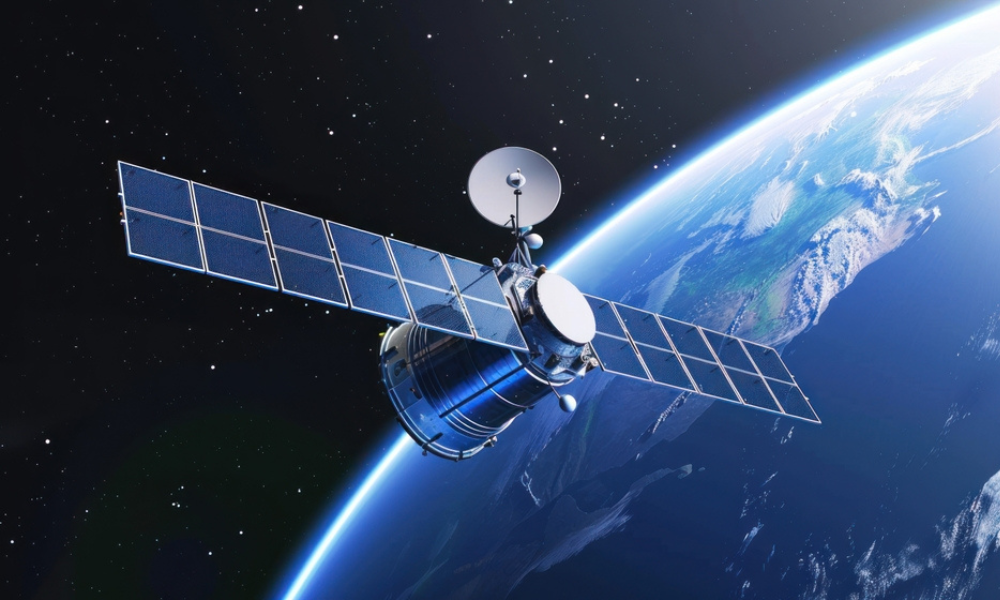
How satellites are closing the digital divide

Modern Space Communications and Telecommunications Satellites. Broadcasting

This feature was first published in August 2025 in My Mensa Weekly, our exclusive newsletter for Mensa members. Find out more about becoming a Mensa member here.

Words: Andrew Cattanach

“For society today, connectivity is essential,” said Margherita Della Valle, CEO of Vodafone Group, speaking at the World Governments Summit in Dubai [in February 2025]. “We are moving from the old divide in the world between the haves and the have-nots towards a new divide, which is between those who have access to connectivity and those who don’t.”

Her words reflect a growing consensus that internet access is no longer a luxury but a necessity – fundamental to education, healthcare and disaster response, and increasingly regarded as a basic human right on par with food, clean water and sanitation.

Cables at the core

At its core, the global internet is still a network of cables and hardware. More than 95% of the world’s traffic flows through vast webs of undersea fibre-optic cables and fixed lines in cities and towns. This system works efficiently in developed, densely populated regions. But where the terrain is less obliging – mountainous, sparsely inhabited or politically unstable – laying fibre becomes a complex and expensive business.

That is why roughly 2.6 billion people – a third of humanity – remain offline, according to the UN’s International Telecommunication Union. Closing this gap has become a global priority. And increasingly, satellites are seen as the bridge.

From exclusive club to global access

Not long ago, satellites were the preserve of superpowers. In 1970, only four nations – the Soviet Union, the US, France and Japan – had launched their own. China joined later that year, and for decades the ‘space club’ remained small, exclusive and very expensive.

Fast forward to today and the picture is radically different. Cheaper launches, reusable rockets such as SpaceX’s Falcon 9, and even 3D-printed components have slashed costs. In 2010, a single launch might cost hundreds of millions of dollars; now, the price tag can be a tenth of that. Suddenly, satellites are no longer out of reach.

By July 2025, SpaceX’s Starlink alone had deployed more than 7,800 satellites, providing internet to two million users in the US and another four million across 125 countries. Amazon’s Kuiper project is hot on its heels. Together they are transforming the economics of connectivity. The impact is being felt across the globe, from the Highlands of Scotland to rural Kenya.

The risks of outsourcing space

Yet this revolution brings with it difficult questions. Services such as Starlink and Kuiper are privately owned. Governments pay to use them, but the satellites remain under foreign corporate control. In an age of mounting geopolitical tension, is it wise for a nation to outsource something as vital as internet access?

This year brought a stark reminder. During Russia’s Victory Day parade, marking 80 years since the end of the Second World War, hackers hijacked a satellite providing television service to Ukraine. Instead of regular programming, Ukrainian viewers were shown Red Square filled with marching soldiers. The ownership of the satellite has not been publicly confirmed, but given Ukraine’s limited space project, it was almost certainly a leased, privately run service.

The symbolism was chilling. And the warning is clear: whether through propaganda, espionage or disruption, satellites have become targets.

Fragile web
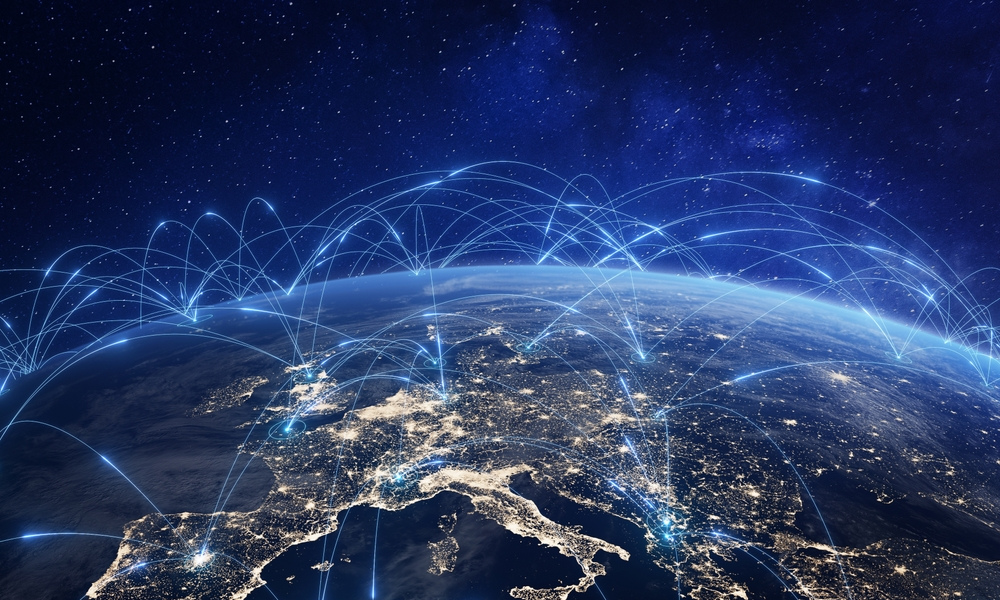
Communication technology with global internet network connected in Europe (1)

The stakes go beyond television or even internet access. Modern economies are bound together by a fragile web of interdependencies. Energy grids depend on telecommunications. Supply chains rely on GPS. Emergency services need stable data flows.

As one commentator noted: “All the critical infrastructure systems that support everyday living are wrapped into this plexus. A disturbance anywhere in it can result in domino impacts.” (See the July/August issue of your IQ magazine, page 27.)

In other words, knock out the internet and you risk knocking out everything else.

Sovereign satellites on the rise

No wonder governments are looking to bring more of this capability under their own control. Fewer than 20 nations currently operate sovereign communications satellites, but that number is rising fast. Affordable, flexible satellite solutions are allowing states to move beyond dependence on commercial providers, giving them greater autonomy in space.

Traditionally, these communications relied on large geostationary satellites – costly, heavy, and requiring dedicated rockets. Today, innovations are reshaping the landscape. Geostationary smallsats (GEO SmallSats) – orbiting 36,000 kilometres above the equator, remaining fixed over a single point and covering roughly a third of the globe – are emerging as an option.

The result is a democratisation of geostationary space. Countries can now deploy satellites that provide strategic, resilient coverage without relying solely on foreign or commercial operators. By taking control of these GEO SmallSats, governments gain autonomy over essential data and communications infrastructure, strengthening national security and economic resilience in an increasingly interconnected and complex world.

Some larger corporations are hedging their bets too, supplementing traditional networks with smaller satellites. And with climate change intensifying storms, floods and wildfires, having resilient back-up systems matters. Cabled networks can be washed away or severed; satellites offer another layer of security.

The fourth industrial revolution

All this is unfolding against the backdrop of what some call the fourth industrial revolution – a period where digital interconnectedness, AI, robotics and automation are reshaping economies. For this vision to hold, universal internet access is critical. Without it, countries risk being left behind.

And yet this same revolution coincides with a world more prone to shocks: cyber-attacks, global conflicts, extreme weather. Enemy states, and even non-state actors, will exploit weaknesses wherever they find them, whether in fibre cables on the ocean floor or satellites orbiting above our heads.

That is why sovereign capability matters. For governments, securing their own slice of space is no longer about prestige or ambition. It is about resilience – ensuring their citizens can learn, work, trade and communicate even when the world around them falters.

The democratisation of space

Discover how nations are using cutting-edge geostationary and small satellites to expand internet access, secure communications and bridge the digital divide.

How satellites are closing the digital divide

This feature was first published in August 2025 in My Mensa Weekly, our exclusive newsletter for Mensa members. Find out more about becoming a Mensa member here.

Words: Andrew Cattanach

“For society today, connectivity is essential,” said Margherita Della Valle, CEO of Vodafone Group, speaking at the World Governments Summit in Dubai [in February 2025]. “We are moving from the old divide in the world between the haves and the have-nots towards a new divide, which is between those who have access to connectivity and those who don’t.”

Her words reflect a growing consensus that internet access is no longer a luxury but a necessity – fundamental to education, healthcare and disaster response, and increasingly regarded as a basic human right on par with food, clean water and sanitation.

Cables at the core

At its core, the global internet is still a network of cables and hardware. More than 95% of the world’s traffic flows through vast webs of undersea fibre-optic cables and fixed lines in cities and towns. This system works efficiently in developed, densely populated regions. But where the terrain is less obliging – mountainous, sparsely inhabited or politically unstable – laying fibre becomes a complex and expensive business.

That is why roughly 2.6 billion people – a third of humanity – remain offline, according to the UN’s International Telecommunication Union. Closing this gap has become a global priority. And increasingly, satellites are seen as the bridge.

From exclusive club to global access

Not long ago, satellites were the preserve of superpowers. In 1970, only four nations – the Soviet Union, the US, France and Japan – had launched their own. China joined later that year, and for decades the ‘space club’ remained small, exclusive and very expensive.

Fast forward to today and the picture is radically different. Cheaper launches, reusable rockets such as SpaceX’s Falcon 9, and even 3D-printed components have slashed costs. In 2010, a single launch might cost hundreds of millions of dollars; now, the price tag can be a tenth of that. Suddenly, satellites are no longer out of reach.

By July 2025, SpaceX’s Starlink alone had deployed more than 7,800 satellites, providing internet to two million users in the US and another four million across 125 countries. Amazon’s Kuiper project is hot on its heels. Together they are transforming the economics of connectivity. The impact is being felt across the globe, from the Highlands of Scotland to rural Kenya.

The risks of outsourcing space

Yet this revolution brings with it difficult questions. Services such as Starlink and Kuiper are privately owned. Governments pay to use them, but the satellites remain under foreign corporate control. In an age of mounting geopolitical tension, is it wise for a nation to outsource something as vital as internet access?

This year brought a stark reminder. During Russia’s Victory Day parade, marking 80 years since the end of the Second World War, hackers hijacked a satellite providing television service to Ukraine. Instead of regular programming, Ukrainian viewers were shown Red Square filled with marching soldiers. The ownership of the satellite has not been publicly confirmed, but given Ukraine’s limited space project, it was almost certainly a leased, privately run service.

The symbolism was chilling. And the warning is clear: whether through propaganda, espionage or disruption, satellites have become targets.

Fragile web

Communication technology with global internet network connected in Europe (1)

The stakes go beyond television or even internet access. Modern economies are bound together by a fragile web of interdependencies. Energy grids depend on telecommunications. Supply chains rely on GPS. Emergency services need stable data flows.

As one commentator noted: “All the critical infrastructure systems that support everyday living are wrapped into this plexus. A disturbance anywhere in it can result in domino impacts.” (See the July/August issue of your IQ magazine, page 27.)

In other words, knock out the internet and you risk knocking out everything else.

Sovereign satellites on the rise

No wonder governments are looking to bring more of this capability under their own control. Fewer than 20 nations currently operate sovereign communications satellites, but that number is rising fast. Affordable, flexible satellite solutions are allowing states to move beyond dependence on commercial providers, giving them greater autonomy in space.

Traditionally, these communications relied on large geostationary satellites – costly, heavy, and requiring dedicated rockets. Today, innovations are reshaping the landscape. Geostationary smallsats (GEO SmallSats) – orbiting 36,000 kilometres above the equator, remaining fixed over a single point and covering roughly a third of the globe – are emerging as an option.

The result is a democratisation of geostationary space. Countries can now deploy satellites that provide strategic, resilient coverage without relying solely on foreign or commercial operators. By taking control of these GEO SmallSats, governments gain autonomy over essential data and communications infrastructure, strengthening national security and economic resilience in an increasingly interconnected and complex world.

Some larger corporations are hedging their bets too, supplementing traditional networks with smaller satellites. And with climate change intensifying storms, floods and wildfires, having resilient back-up systems matters. Cabled networks can be washed away or severed; satellites offer another layer of security.

The fourth industrial revolution

All this is unfolding against the backdrop of what some call the fourth industrial revolution – a period where digital interconnectedness, AI, robotics and automation are reshaping economies. For this vision to hold, universal internet access is critical. Without it, countries risk being left behind.

And yet this same revolution coincides with a world more prone to shocks: cyber-attacks, global conflicts, extreme weather. Enemy states, and even non-state actors, will exploit weaknesses wherever they find them, whether in fibre cables on the ocean floor or satellites orbiting above our heads.

That is why sovereign capability matters. For governments, securing their own slice of space is no longer about prestige or ambition. It is about resilience – ensuring their citizens can learn, work, trade and communicate even when the world around them falters.

The democratisation of space

Discover how nations are using cutting-edge geostationary and small satellites to expand internet access, secure communications and bridge the digital divide.

Related Resources

Got What it Takes

Take the Mensa IQ Test to see if you have what it takes to join the world’s highest IQ society.

Share this online